A field guide to family activities nearby · A few nights in early October
A field guide to family activities nearby · A few nights in early October
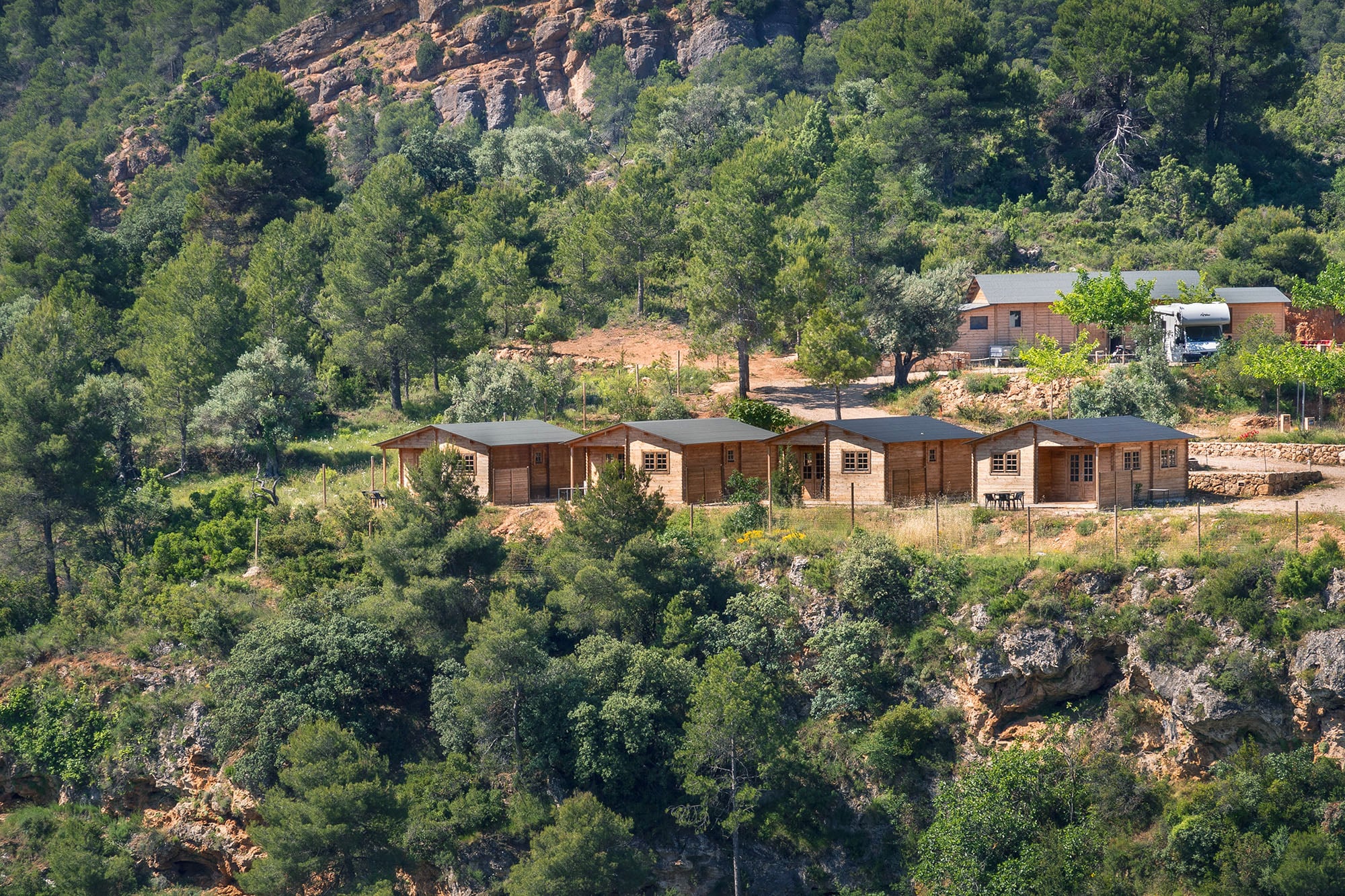
Camping Beceite isn't actually in the village of Beceite — it sits on a hillside about a ten-minute walk outside town, in the Matarraña region of Teruel, tucked into the Ports de Beceite mountains right where Aragón meets Catalonia and the Comunitat Valenciana.
Expect a mix of river scenery, a canyon walkway, a few of the region's prettiest stone villages, and several things built purely for kids — a flat family cycling route with a swimmable warm spring, a dinosaur museum, and a treetop adventure park — plus a full day trip across the regional border to the walled town of Morella.
The village of Beceite itself, an easy walk or a two-minute drive from the campsite.
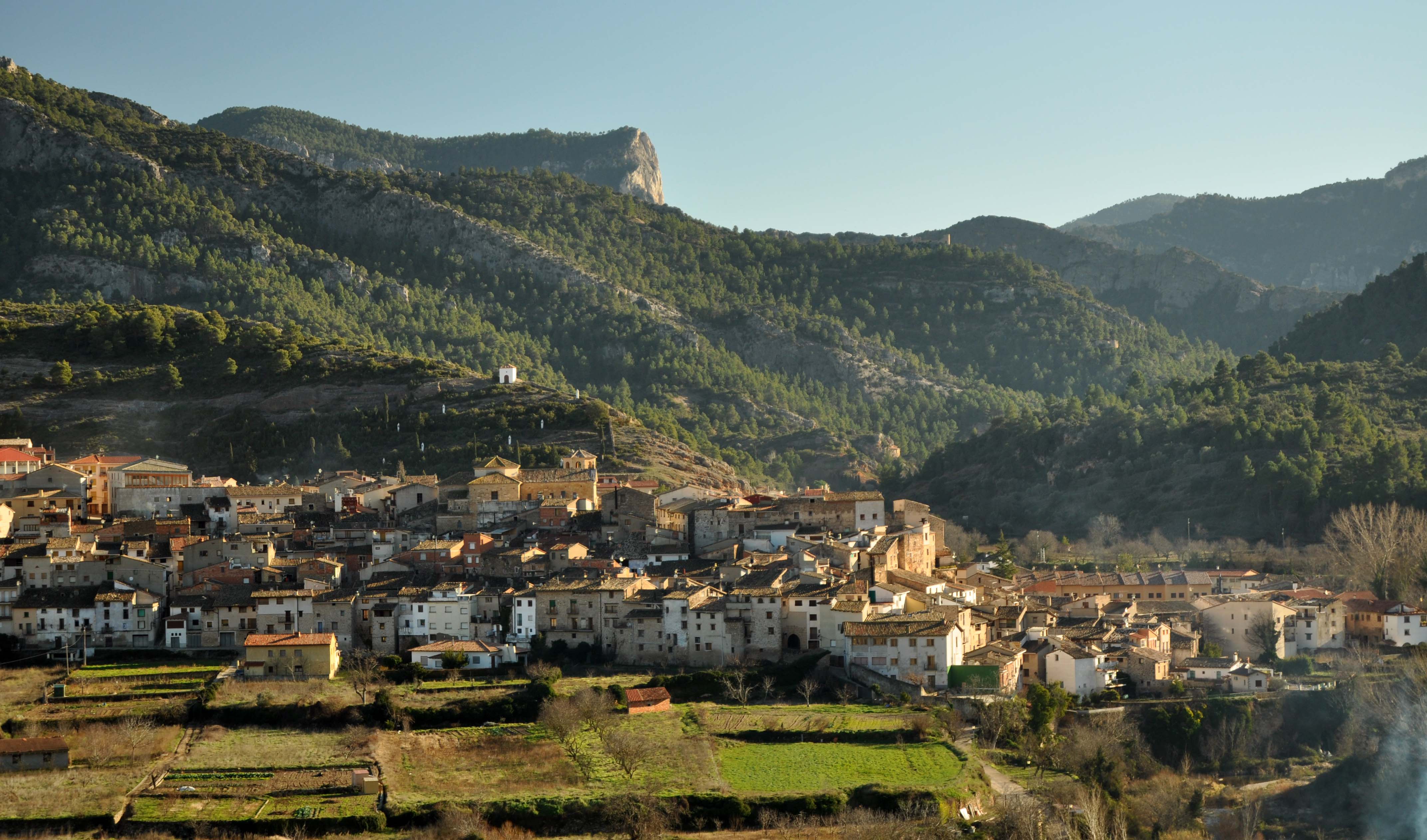
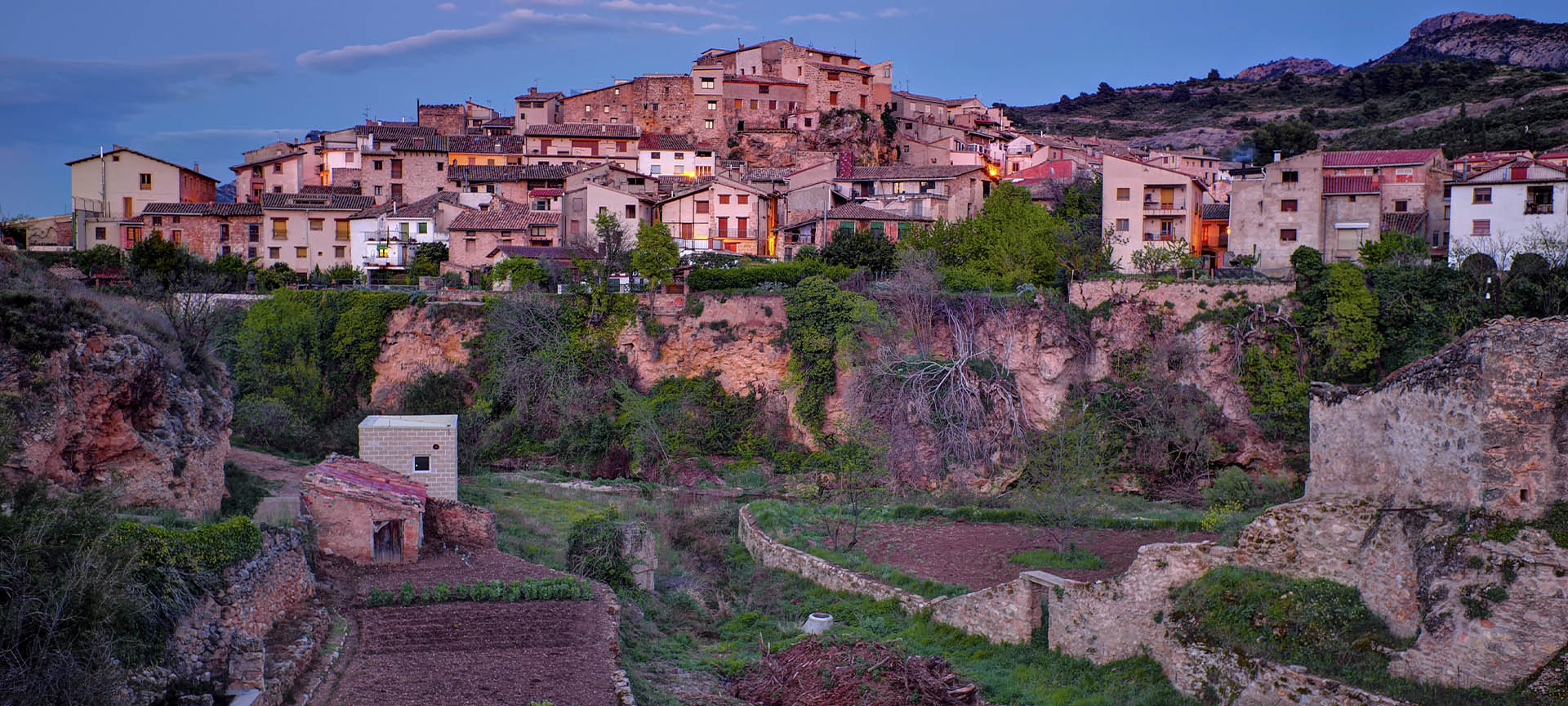
Beceite's stone rooftops with the Ports de Beceite mountains rising behind the village
Camping Beceite is about a ten-minute walk from this small stone-built village, whose old quarter is protected as a Bien de Interés Cultural. The streets are steep and cobbled, with several medieval gateways still standing and a single-arch stone bridge over the Matarraña, where the river forms a string of natural pools right by town. The water's too cold to swim in by October, but it's a pleasant flat walk with children, and the village has a bakery and a couple of small restaurants for a low-key breakfast or dinner without needing the car.
More info →A canyon walkway and one more of the region's stone villages, both a short drive away.
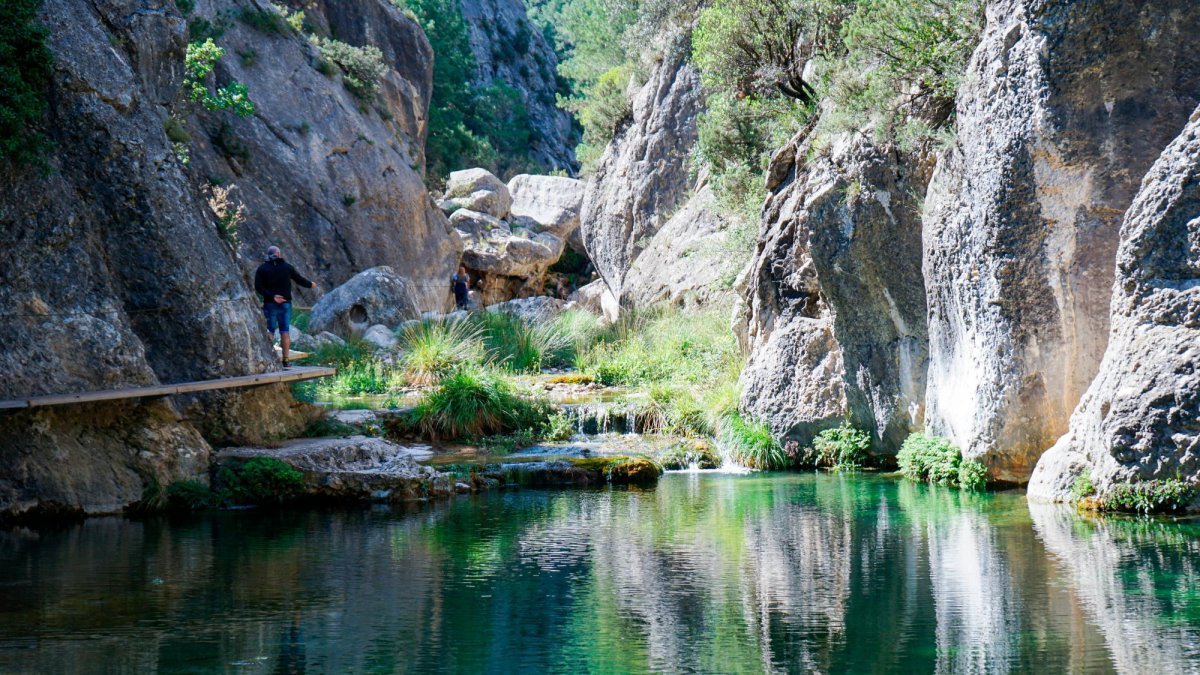
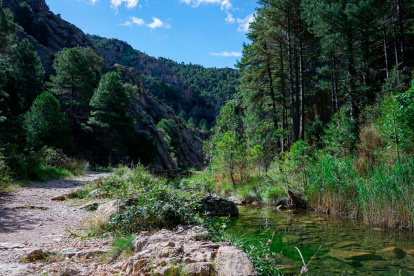
The Parrizal boardwalk trail, following the Matarraña river through the canyon
A signed road runs about 6km from the village to the car park (paid parking, one ticket per vehicle rather than per person). From there it's an 800m walk past rock art from around 3,500 BC — a UNESCO-listed site, freely visible from the path — before wooden boardwalks carry the trail another 3km along the river to the "Estrechos," a narrow gorge with 60m walls. That final narrow stretch is only walkable when the river runs dry, which in practice means summer; the rest of the year, including October, you'll walk to its entrance and turn back, which is still a full and scenic outing. The route suits children from about six upward but isn't manageable with a buggy, and swimming inside the reserve isn't allowed. Parking tickets are sold online only, not at the tourist office, so it's worth booking ahead — check current prices and time slots locally, since the booking system is updated season to season.
More info →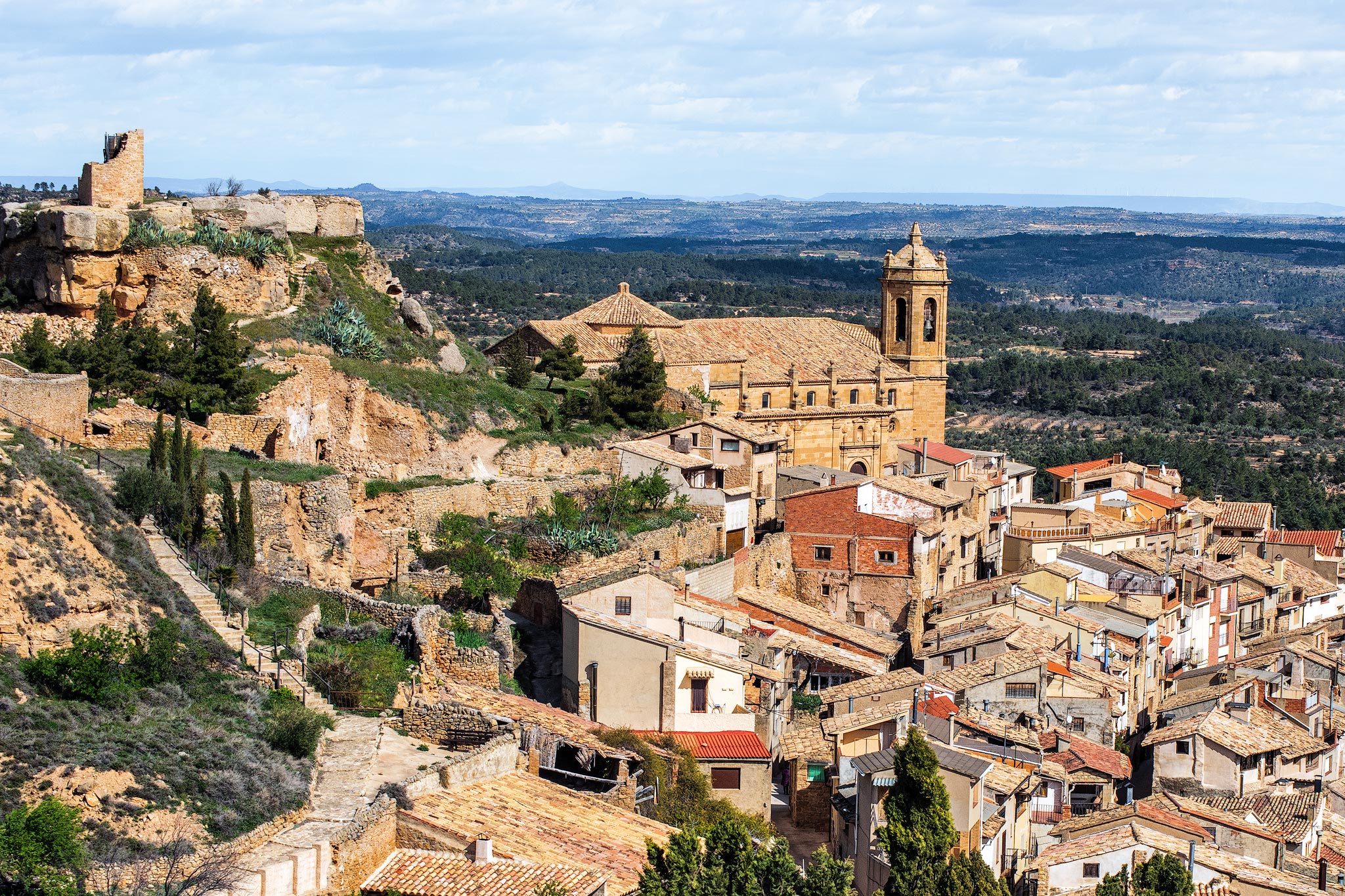
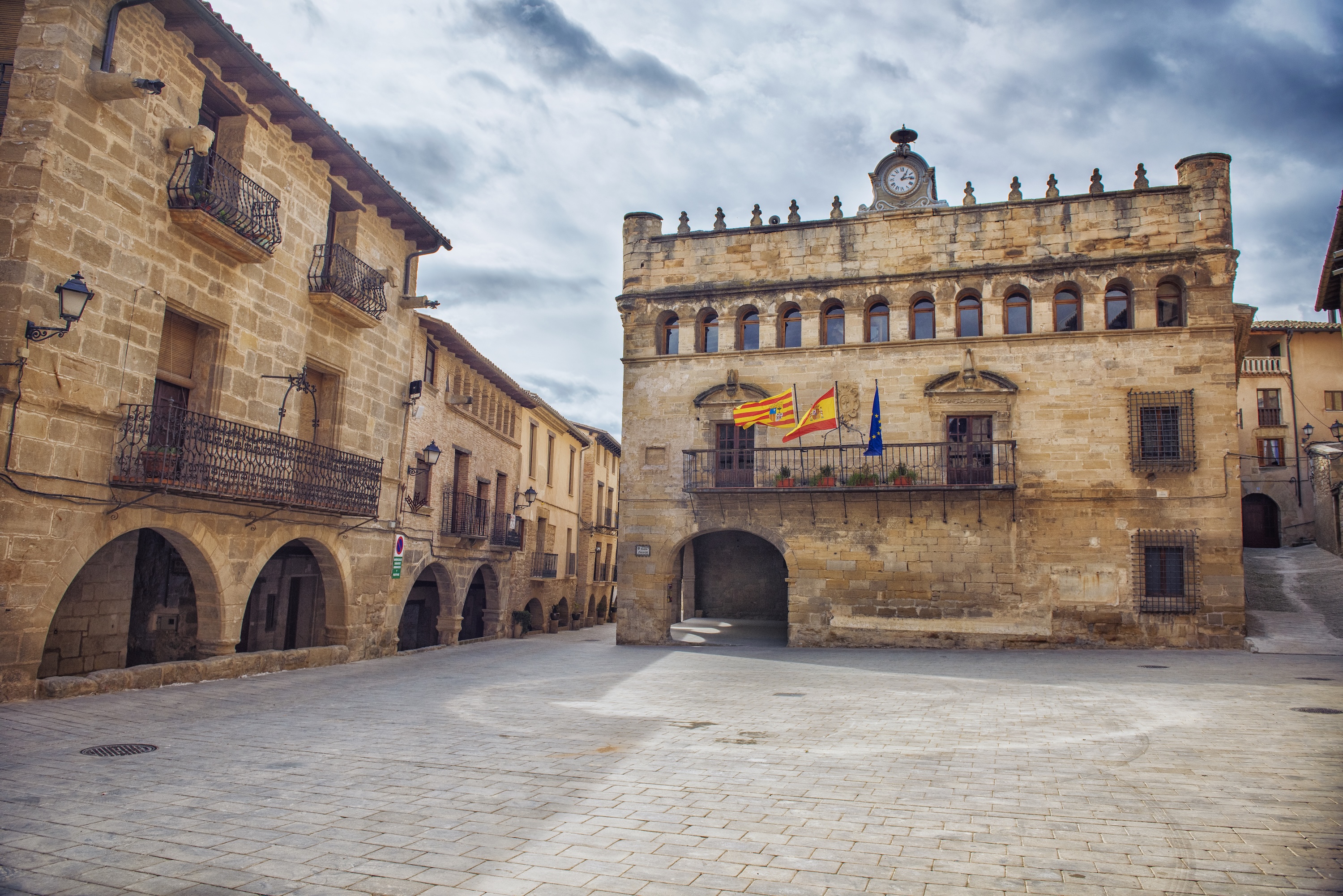
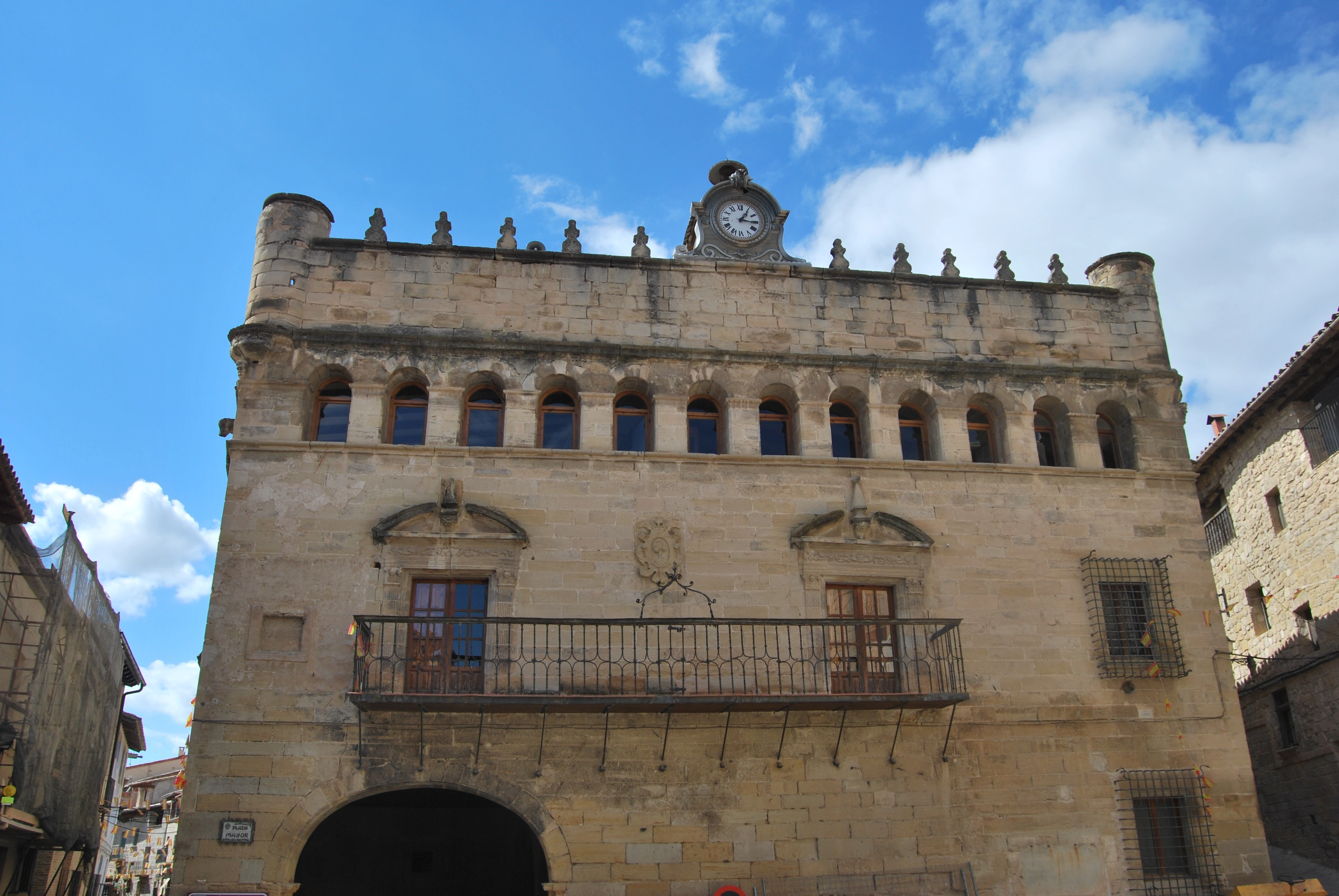
La Fresneda's arcaded main square and the stone streets of its old quarter
One of the prettiest villages in the Matarraña, built around a porticoed Plaza Mayor with a Renaissance town hall. A short climb leads up past an old cemetery to the ruined Calatravo castle and the Santa Bárbara hermitage, both with wide views over the valley — an easy, low-key walk that works well with tired legs from the Parrizal earlier in the trip.
More info →A castle town, and a flat, family-friendly cycling route with a swimmable warm spring at the end of it.
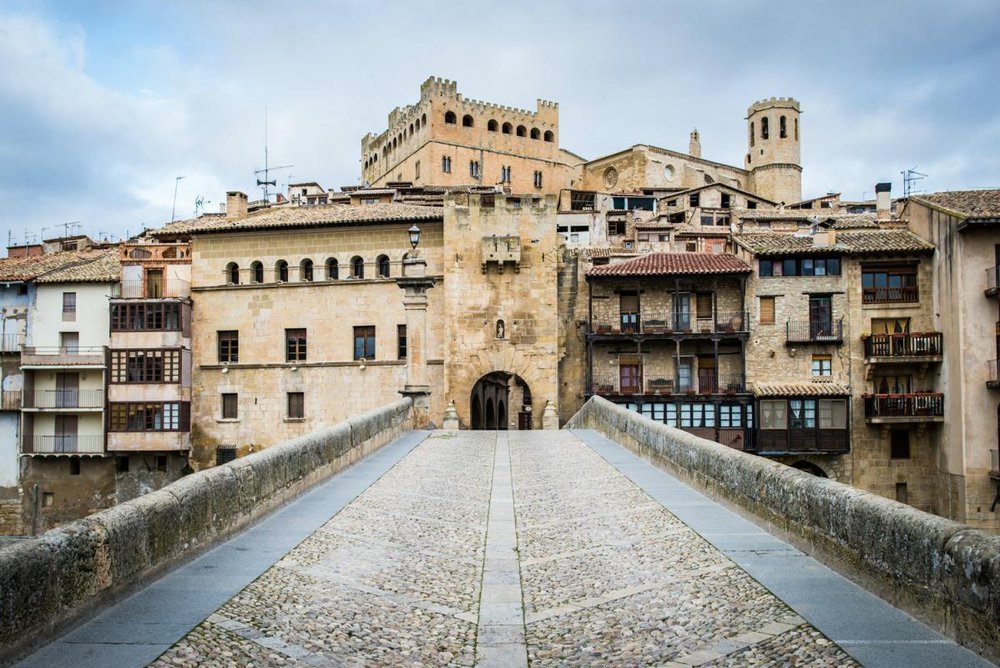
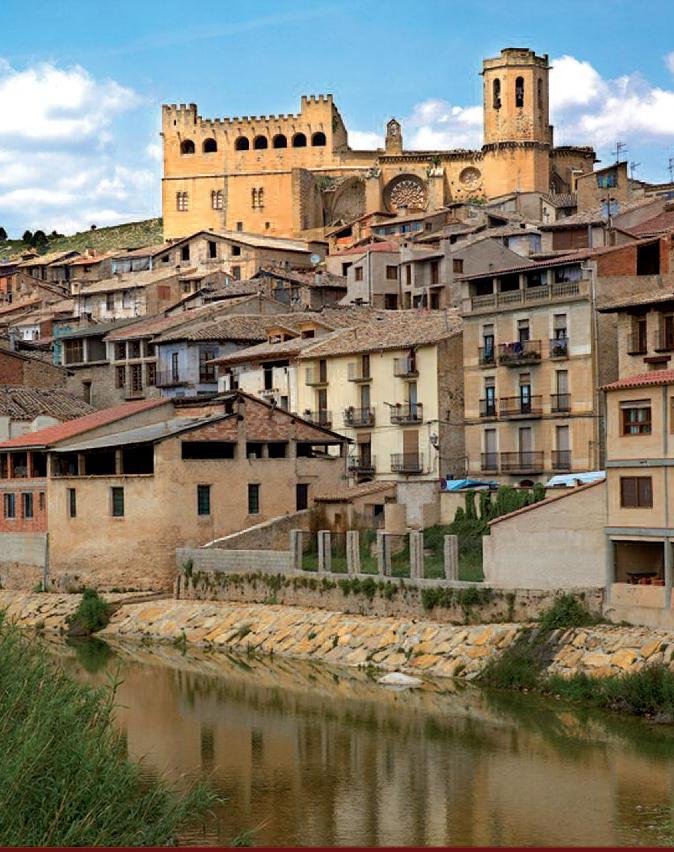
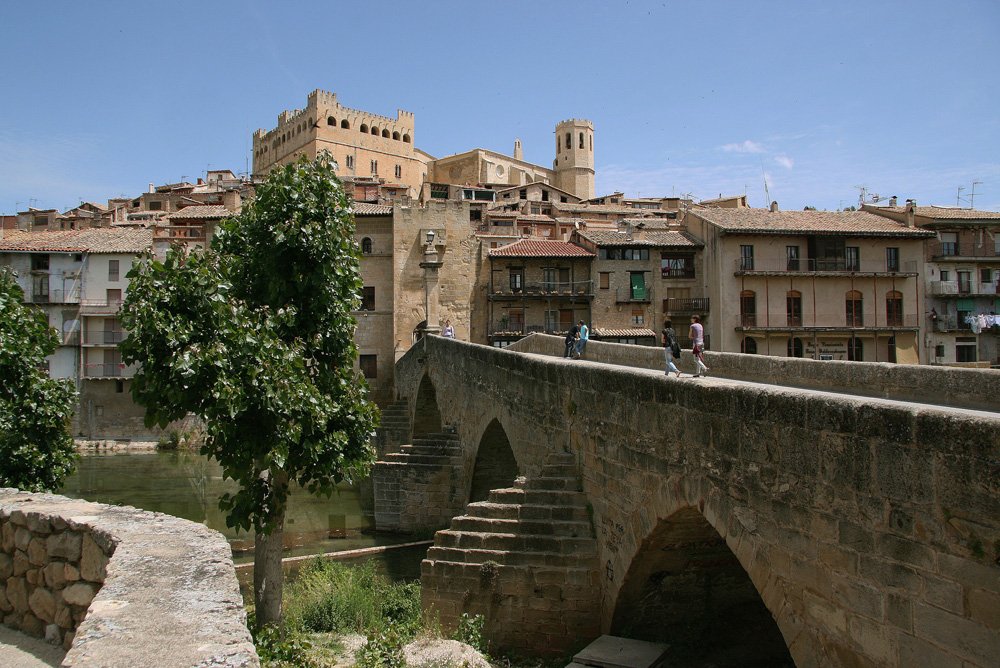
Valderrobres' castle-palace and church above the medieval stone bridge over the Matarraña
The capital of the Matarraña comarca, entered across a 14th-century stone bridge and through the old Portal de San Roque into a knot of medieval streets. At the top, the castle-palace built for the archbishops of Zaragoza connects directly to the Gothic church of Santa María la Mayor; a combined ticket covers both, taking in old kitchens, stables and dungeons, plus good views over the town from the towers.
More info →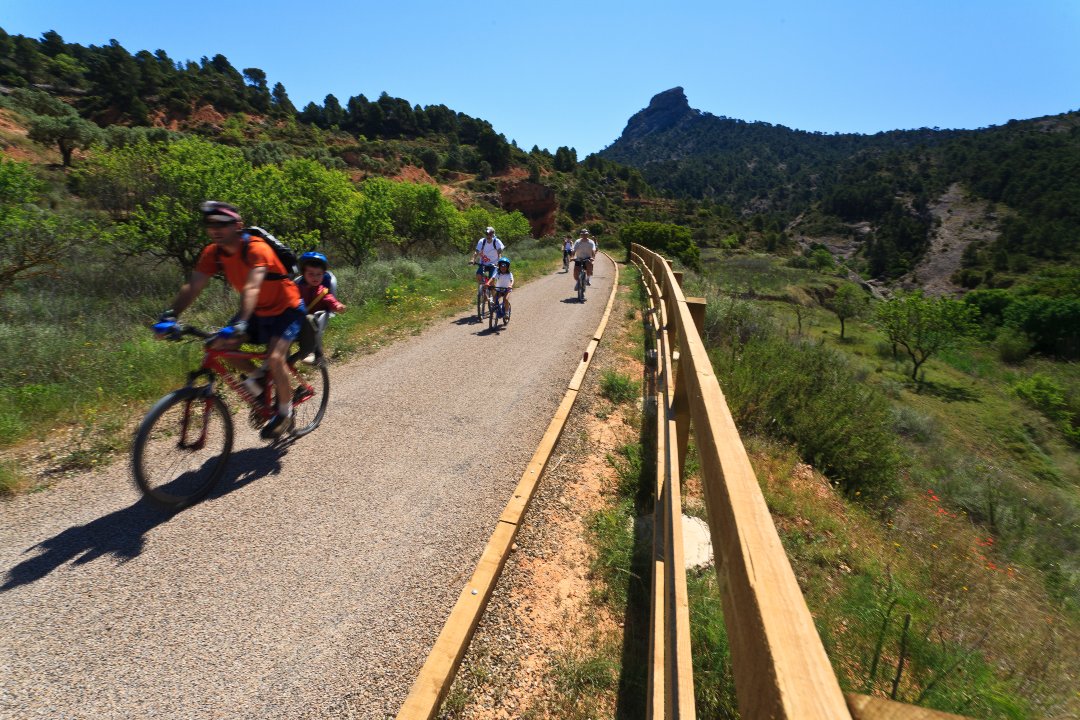
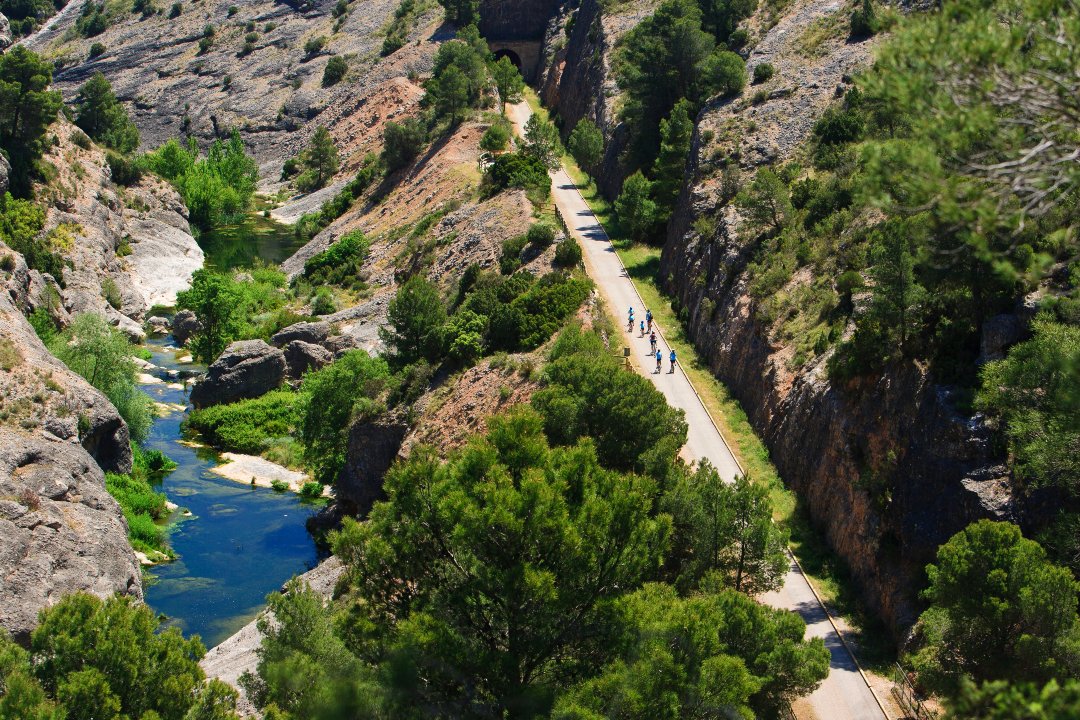
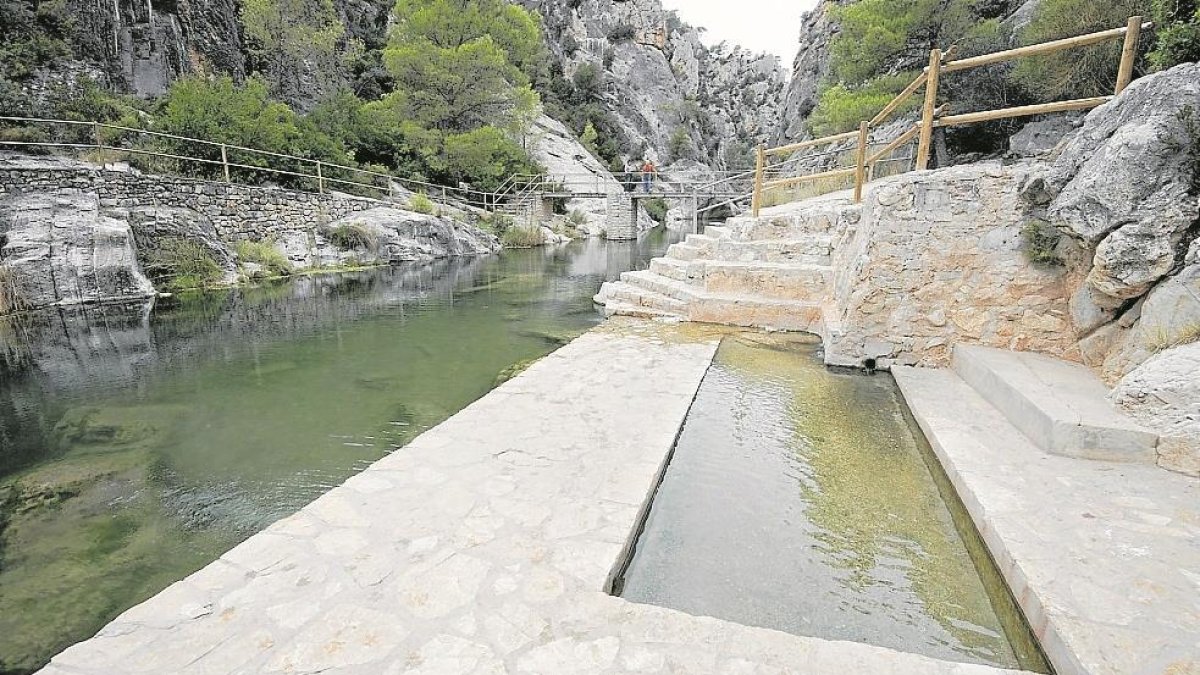
The old railway line turned cycling greenway, and the warm-water pools at La Fontcalda
This former railway line between Aragón and Catalonia is now a flat, car-free cycling track, specifically recommended by the regional tourist board as one of the easier family stretches with children: no real gradients, a smooth surface that takes trailers and child seats, and a run of old tunnels that most kids find more exciting than daunting (bring bike lights or a head torch for the unlit ones). Bikes, kids' seats and trailers can be hired in Horta de Sant Joan, the nearest starting point to the campsite. Ride, or drive, on towards Bot and Prat de Comte and you reach the Fontcalda sanctuary, where the Canaletes river runs warm — around 28°C, unlike the cold pools nearer Beceite — through a small gorge, with a picnic area and a children's playground with swings at the old Prat de Comte station right nearby.
More info →Across the border in Castellón — a walled hilltop town with enough packed in for a whole day, dinosaurs and a treetop park included.
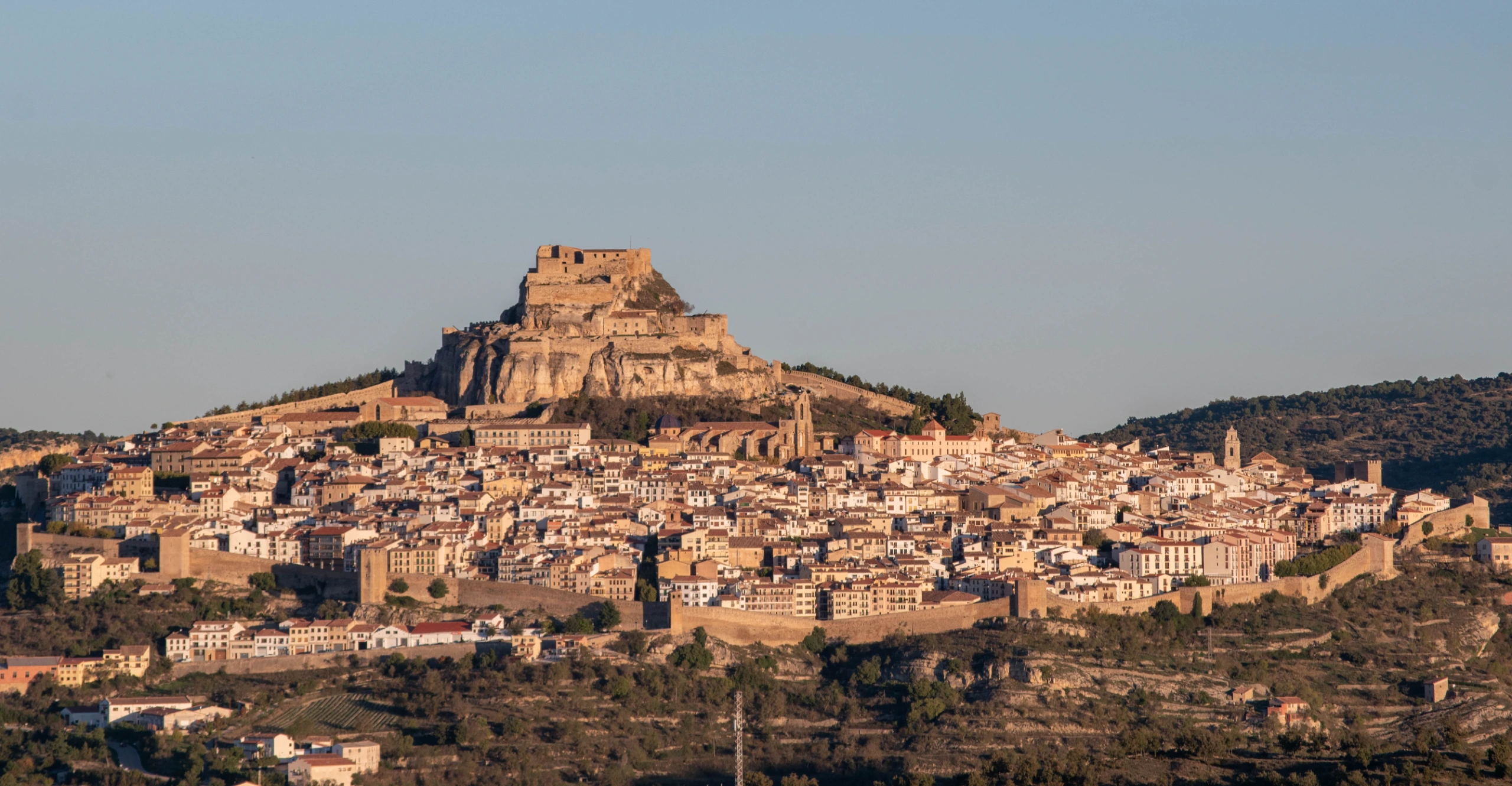
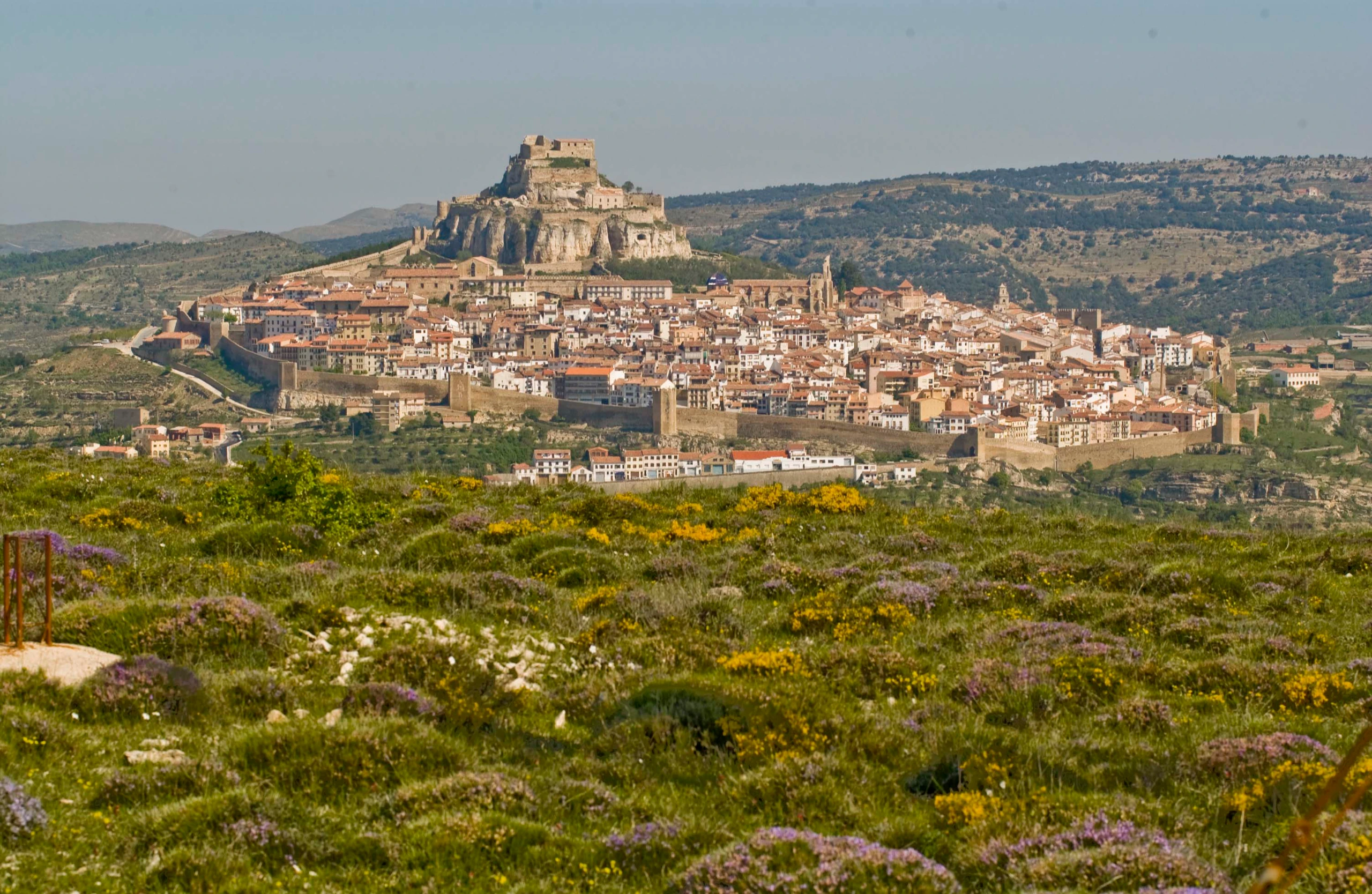
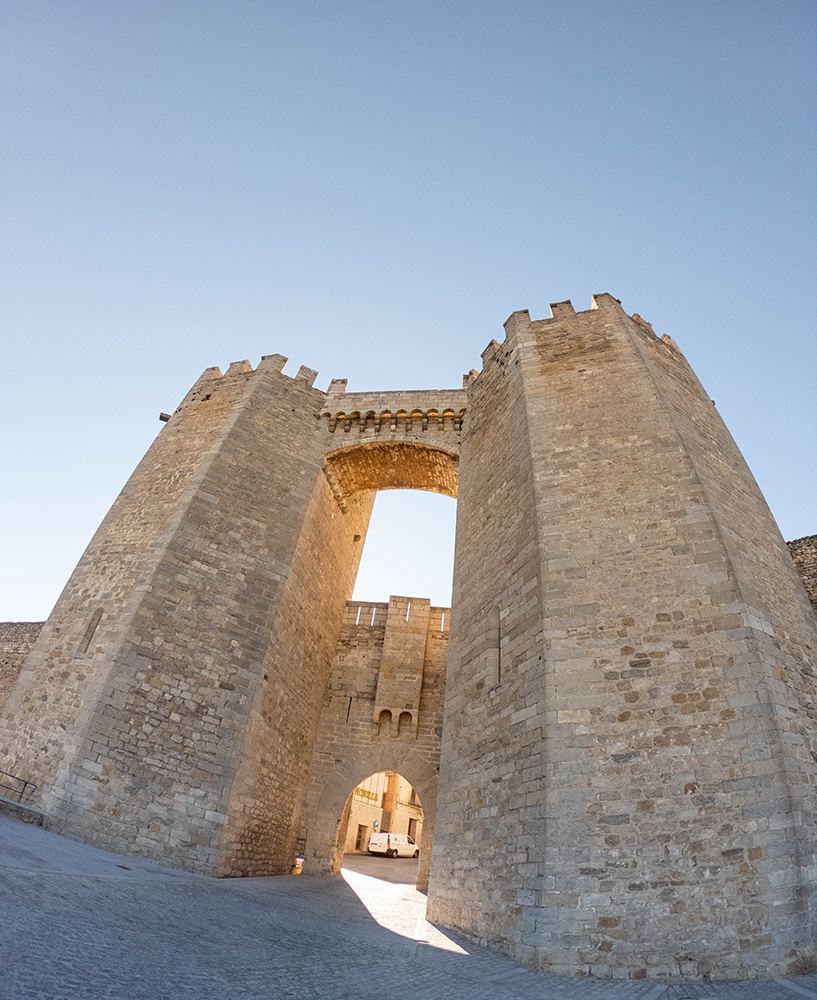
Morella's hilltop castle above the town's nearly 2km of medieval walls
Morella is ringed by close to two kilometres of medieval wall, with the Portal de San Miguel as its main gate and a castle crowning the highest point of the rock above the town. Inside the walls, the Convento de San Francisco has a Gothic cloister with a painted "Dance of Death," and the basilica of Santa María la Mayor is one of the better examples of Valencian Gothic in the region. It's about 55 minutes' drive from the campsite, so it works best as a day trip rather than an afternoon.
More info →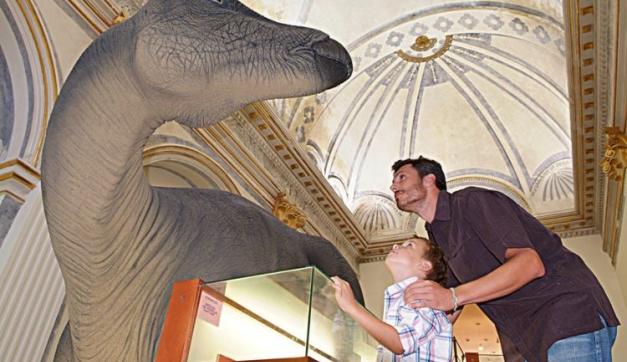
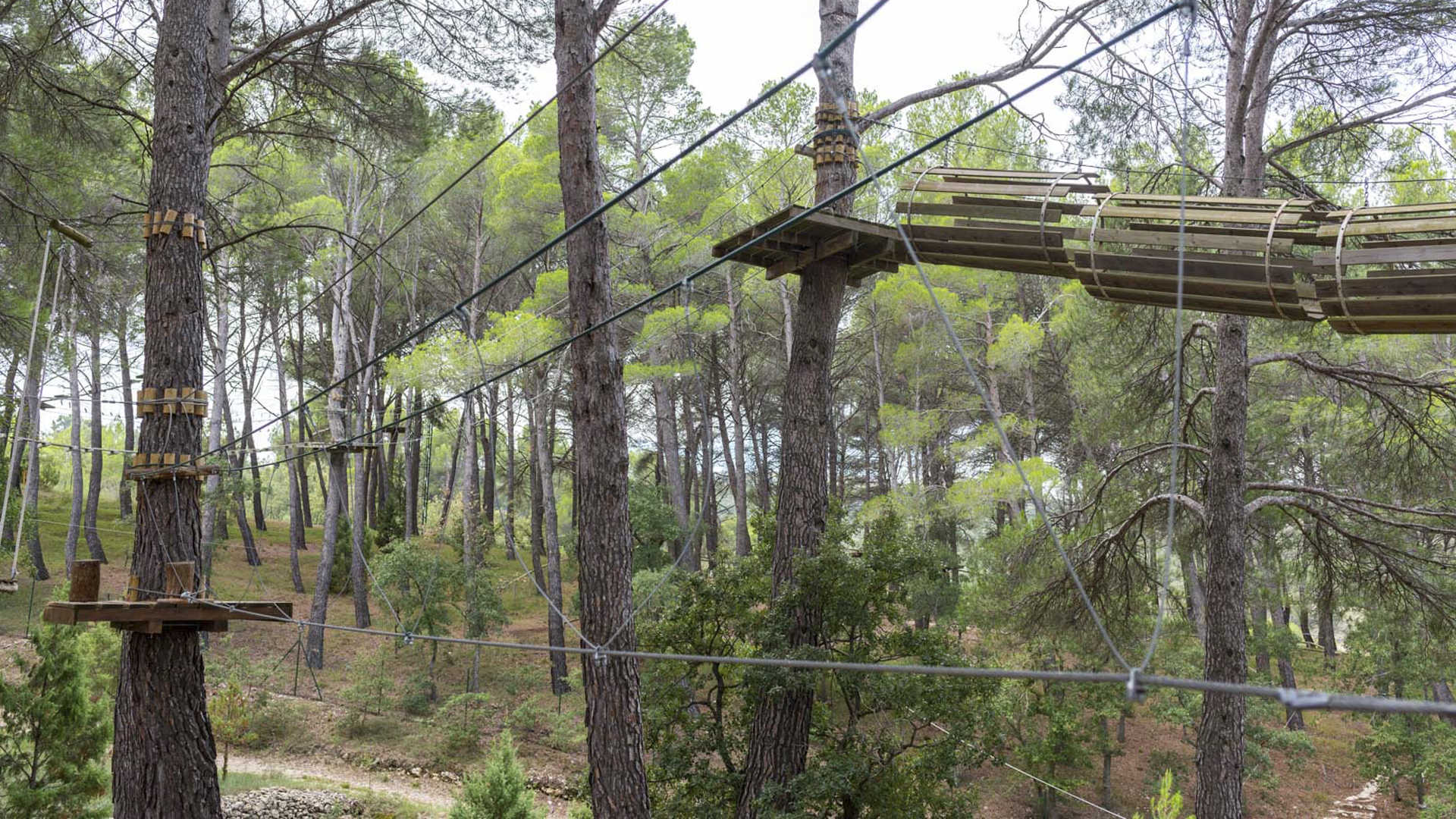
A life-size dinosaur model at the Temps de Dinosaures museum, and one of the treetop courses at Saltapins
Inside the walls, the small Temps de Dinosaures museum sits in a chapel of the church of San Miguel, with a real-scale Iguanodon reproduction and genuine Cretaceous-era fossils found in the surrounding area; it's open Tuesday to Sunday, with an optional escape-room activity for older kids. Just outside town, the Saltapins treetop park runs rope-and-zipline circuits between 2m and 17m up, split into three levels (green, blue, red) so younger and older children can each find a suitable course — reservations are needed in advance.
More info →